

When Should You Outsource eCommerce Fulfilment? A Scaling Guide for UK Brands
When Should You Outsource eCommerce Fulfilment? A Scaling Guide for UK Brands
Scaling your eCommerce brand is an exciting time. More orders, more customers and more visibility! But alongside growth, the cracks can begin to show. Packing teams get overwhelmed, stock accuracy slips, and before you know it, bad reviews start coming in. Unfortunately, what worked at 50 orders a day rarely works at 500.
The question we hear most often is simple: when should I outsource eCommerce fulfilment?
At InterSend, we work with ambitious UK brands who have reached a point where their logistics shifts from being a background task, to a growth limiter. This guide is here to help you understand the signs, financial implications, and tipping points within your operations that will indicate its time to move on from in-house fulfilment to a specialist eCommerce fulfilment partner.
Many eCommerce teams agree they can’t handle spikes in demand (42%) and spend too much time on fulfilment operations (41%) when done in-house. If you are actively researching eCommerce fulfilment services UK brands rely on, we’re here to give you clarity and direction.
What Does It Really Mean to Outsource eCommerce Fulfilment?
Outsourcing your eCommerce fulfilment means partnering with a third-party provider who will store your stock for you in a dedicated eCommerce fulfilment warehouse, pick and pack your orders and ship them directly to your customers.
Instead of having to internally balance managing your warehousing, staffing, negotiating best price with carriers and despatch, with a third-party provider, you can quickly leverage infrastructure that already exists.
In our experience, brands don’t just outsource because they cannot fulfil orders themselves. They outsource because they want to fulfil better, faster and more profitably.
A modern eCommerce fulfilment provider should offer:
For many brands, the real shift is strategic, making fulfilment no longer an operation headache but a way to grow.

What Are the Signs You’re Ready to Outsource Fulfilment?
Recognising the right moment is a critical part of outsourcing. Making the move too early might mean you don’t maximise the value but go too late and you risk stalling your business growth and ending up with unhappy customers who don’t come back.
Here are the most common signals.
1. Your Order Volume Is Becoming Unmanageable
If your daily despatch is so time consuming that you are stretching your team too thin, or taking up time you should be focusing on leadership within your business, you are at the scaling threshold. Manual processes that worked for you in the early stages of your business begin to cause errors and delays.
When your fulfilment becomes reactive rather than a controlled process, it’s time to evaluate your outsourcing.
2. Storage Space Is Limiting Growth
Are you renting additional units or storing stock in multiple locations?
Perhaps you are operating in a warehouse that isn’t really designed for eCommerce fulfilment?
An eCommerce fulfilment warehouse is optimised not just storage, but for despatch. In our experience, poor layout and inadequate systems often cost your business more than the rent itself.
3. Delivery Performance Is Slipping
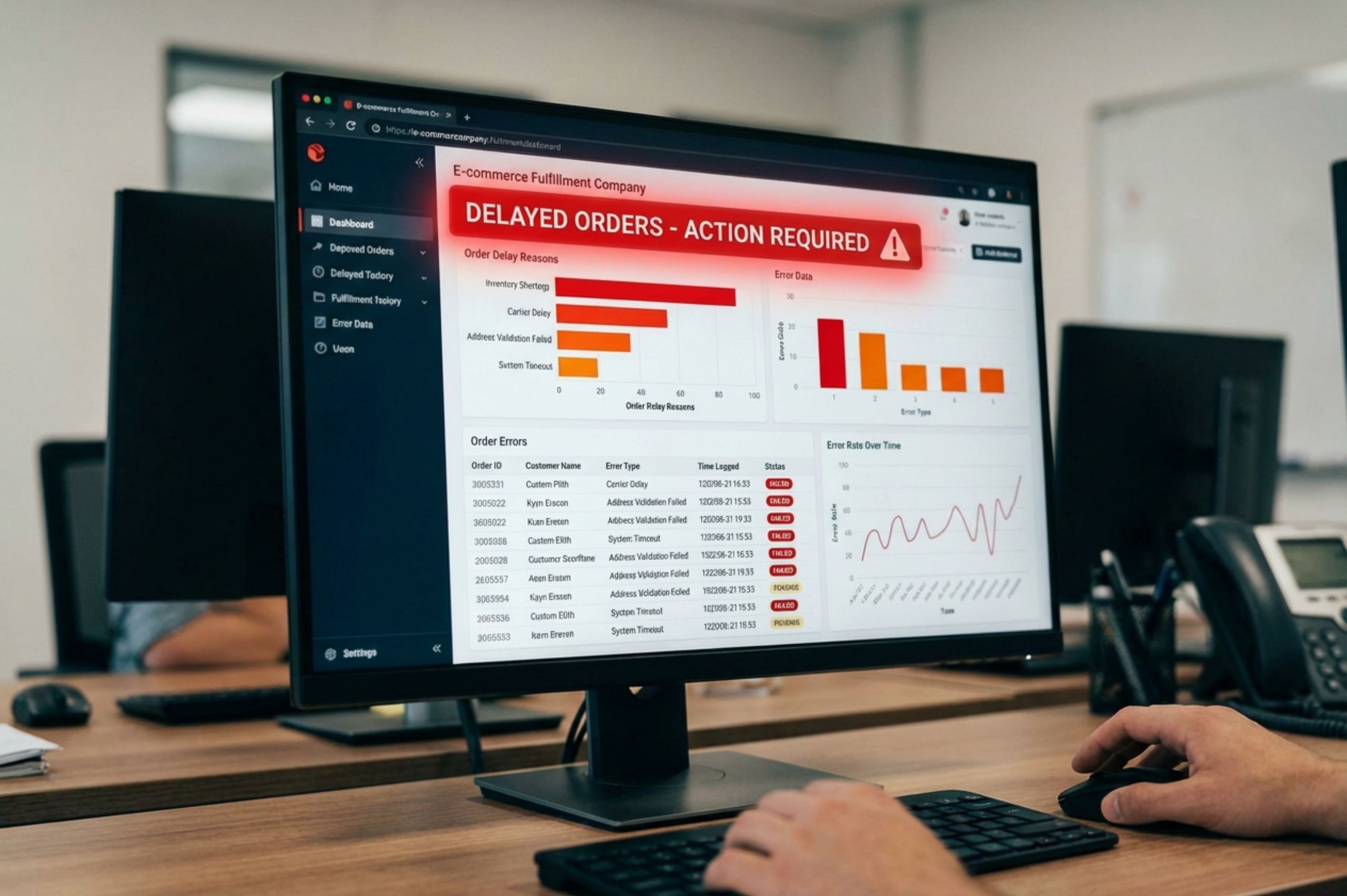
If you are experiencing late despatch notifications, increased customer service tickets or negative reviews referencing shipping, these aren’t just marketing problems. They are common fulfilment issues that eCommerce brands encounter when growth outpaces the systems you have in place.
4. You’re Planning a Major Growth Phase
Retail expansion, marketplace launches, influencer campaigns or international shipping will all multiply orders and order complexity.
If you are planning aggressive growth, outsourcing proactively is smarter than having to firefight later.
In our experience, when late deliveries and fulfilment errors start surfacing, already reported by over two-thirds of UK consumers as recent issues, it’s a sign your current setup isn’t sustainable.
How Does the Cost of In-House Compare to Outsourced Fulfilment?
For businesses looking at their bottom line, cost is often the deciding factor. But to make an informed decision, it must be evaluated properly.
What Are the True Costs of In-House Fulfilment?
eCommerce brands typically consider:
- Warehouse rent
- Staff wages
- Packaging materials
- Courier charges
However, hidden costs include:
- Management time
- Sick pay and staff turnover
- Insurance
- Equipment and maintenance
- Software and systems
- Inefficiencies in carrier rates
- Missed delivery SLAs impacting repeat purchase rate
In our experience, many brands underestimate the cost per order because they do not allocate overheads accurately.
How Is Outsourced ECommerce Fulfilment Priced?
An eCommerce fulfilment provider typically charges:
When comparing costs, the key is not to look at the headline price per order. It is the contribution margin after operational efficiency improves.
At Intersend, our clients find that once carrier discounts, reduced error rates and management time are factored in, outsourced fulfilment is cost neutral or positive at scale.
Find out more: How much does eCommerce Fulfilment Cost in the UK – Full Pricing Breakdown
What Are the Operational Tipping Points for Scaling ECommerce Fulfilment?
Operational tipping points occur when internal systems no longer expand in a straight, predictable manner.
Common thresholds include:
- SKU Complexity Increases
More product variants increase picking errors and miscounts of stock. Without barcode-driven workflows and robust warehouse management systems, your accuracy will suffer. - Multi-Channel Selling Expands
Expanding your selling via Shopify, Amazon, TikTok Shop and wholesale creates inventory sync challenges. Manual reconciliation becomes a risky strategy. - Peak Season Overwhelm
Black Friday and Q4 often expose weaknesses in fulfilment. Peak volume, temporary staff training, overtime and rushed processes can all lead to mistakes.
A well-established eCommerce fulfilment warehouse is built to scale up or down depending on sales volumes, which can be quite challenging to replicate within your own business. Our clients often reach a tipping point where in-house fulfilment can’t scale, a problem supported by data showing that over 40% of eCommerce teams struggle with demand spikes and consistency when fulfilment is managed internally.
Which Growth Bottlenecks Does Outsourcing Solve?
Outsourcing is not just about cost control. It’s about unlocking the momentum that can enable you to grow.
When Is the Wrong Time to Outsource eCommerce Fulfilment?
Outsourcing is a powerful tool, but the timing of it matters.
Signs that you may not be ready may be:
- Order volume is extremely low or inconsistent
- Margins are wafer thin and unable to absorb fulfilment fees
- Product-market fit is not yet established
- Processes are not documented internally
In our experience, outsourcing works best when a brand has proven demand and predictable growth, but operational strain is increasing.
How Long Does It Take to Migrate to an eCommerce Fulfilment Provider?
Step 1: Commercial Agreement and Forecasting
This includes understanding SKU counts, average order volume and your seasonal projections.
Step 2: Systems Integration
Platform integration with Shopify, WooCommerce or other systems you are using typically takes days rather than weeks when APIs are available.
Step 3: Inventory Transfer
Stock is delivered to the eCommerce fulfilment warehouse, booked in and quality checked.
Step 4: Parallel Testing
Test orders will help confirm correct picking logic, packaging standards and tracking communication.
Step 5: Go Live
The switch can happen in a controlled window to avoid service interruption.
At InterSend, a well-managed migration can be completed within two to four weeks depending on complexity.
What Risks and Mistakes Should You Avoid?
Switching fulfilment partners is a strategic decision for your business. To make sure the choice runs smoothly avoid:
- Choosing on Price Alone
Lowest cost rarely equals best value. Accuracy, reliability and communication matter more for your business long term.
- Failing to Forecast Properly
Underestimating the growth creates strain on any eCommerce fulfilment warehouse so its really important to share realistic projections. - Ignoring Cultural Fit
Your fulfilment partner will be representing your brand, and packaging quality and delivery standards influence the perception of your brand. At Intersend we believe partnership is critical and ensure that transparency and proactive communication reduce friction and protect your brand reputation.
- Not Clarifying SLAs
Service level agreements around despatch times, returns processing and inventory reporting should be defined before you begin the relationship so everything is clear between the two parties.
How Do You Know Which eCommerce Fulfilment Provider Is Right for You?
When researching eCommerce fulfilment services UK brands trust, consider:
Ask for case studies, performance metrics, and make sure you understand their approach to problem resolution. The best partnerships we have with our customers are collaborative rather than transactional.
What Happens After You Outsource eCommerce Fulfilment?
Once the transition to a new fulfilment process stabilises, brands we work with typically see:
At Intersend, we see fulfilment as infrastructure for ambitious brands. The right setup supports marketing, product development and expansion rather than constraining it.
Are You Ready to Outsource eCommerce Fulfilment?
If you are experiencing fulfilment challenges eCommerce brands commonly face during growth, now is the time to evaluate your options.
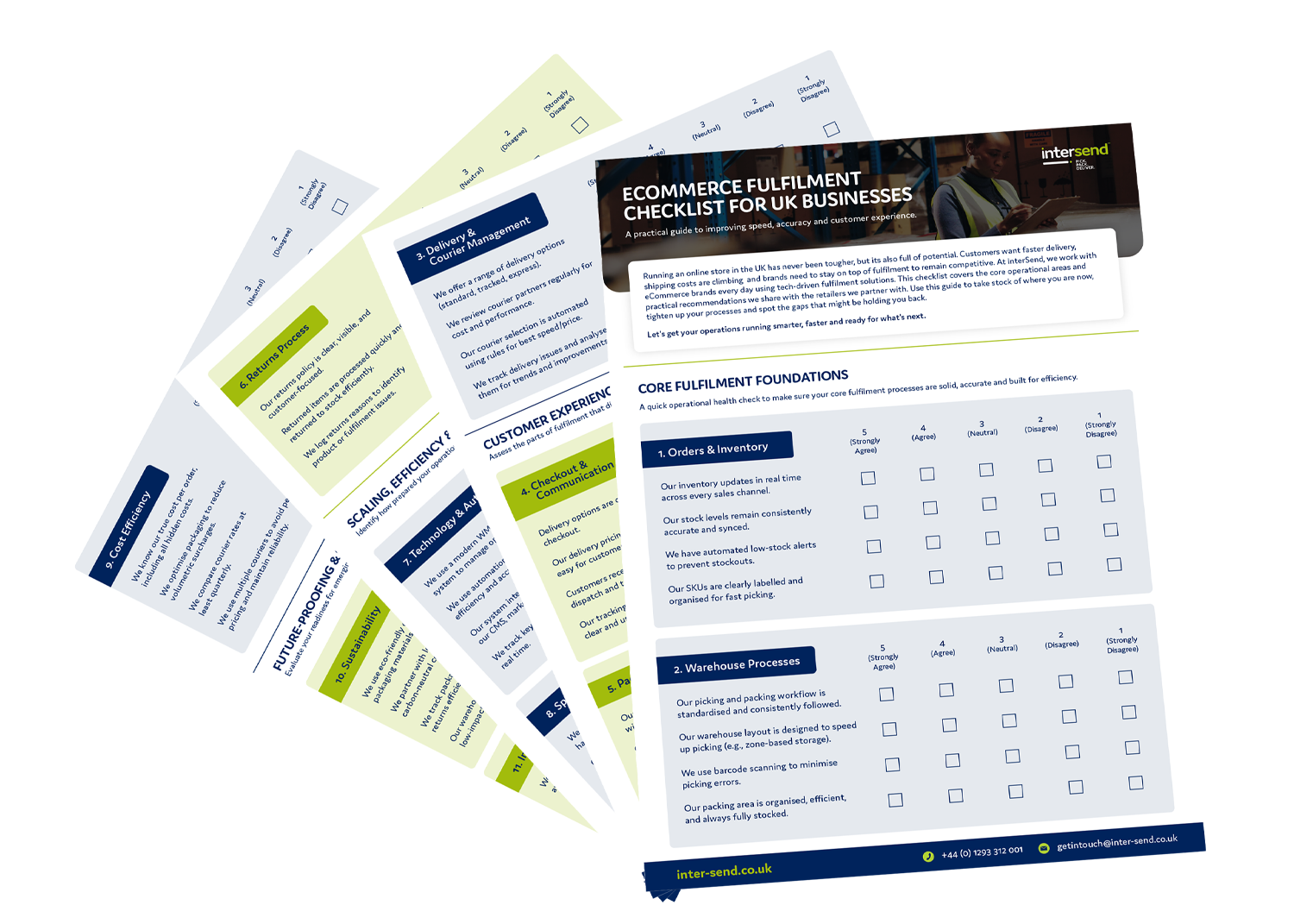
Here is a practical switching checklist:
Ready to Scale with the Right eCommerce Fulfilment Partner?
If you are actively looking to outsource eCommerce fulfilment, partnering with an experienced eCommerce fulfilment provider can accelerate your growth and protect service quality.
At Intersend, we support UK brands through every stage of scaling their eCommerce fulfilment. We prioritise smooth transitions and continual improvements, aiming for efficient operations and lasting collaboration.
Speak to our team to assess your readiness and build a fulfilment strategy designed for scale.


CATEGORIES
RELATED POSTS



POPULAR TAGS
KEEP IN TOUCH
GET OUR FREE WEEKLY RETAIL NEWSSTAND REPORT
Enter your email below for our free weekly retail newsstand report, InterMedia updates and relevant industry news. You can easily unsubscribe at any time. Click here for our privacy policy.