
The Complete Guide to eCommerce Fulfilment in the UK: How to Choose the Right Service for Your Online Store
What is eCommerce fulfilment?
We’ll start with the basics – what is eCommerce fulfilment? eCommerce fulfilment is the process that kicks in the moment a customer clicks “buy”. It’s everything that happens behind the scenes, including storage and picking to packing, shipping and returns, what makes sure a product moves smoothly from your warehouse to your customer’s doorstep.
For online stores, fulfilment is the engine that quietly powers everything: customer satisfaction, delivery speed, cost control and how people perceive your brand. At InterSend, we’ve seen first-hand how switching from in-house fulfilment to a dedicated service can make a real difference. It cuts down shipping times, reduces mistakes and frees up teams who were buried in packing slips and courier labels.
In the UK, eCommerce fulfilment also covers local standards and regulations. This can include returns policies, VAT compliance, courier partnerships and, of course, the extra layer of post-Brexit logistics.
The fulfilment process explained
Let’s break down what actually happens inside a fulfilment operation. Understanding each step helps you see where an external partner can make life easier.
1. Receiving & storage
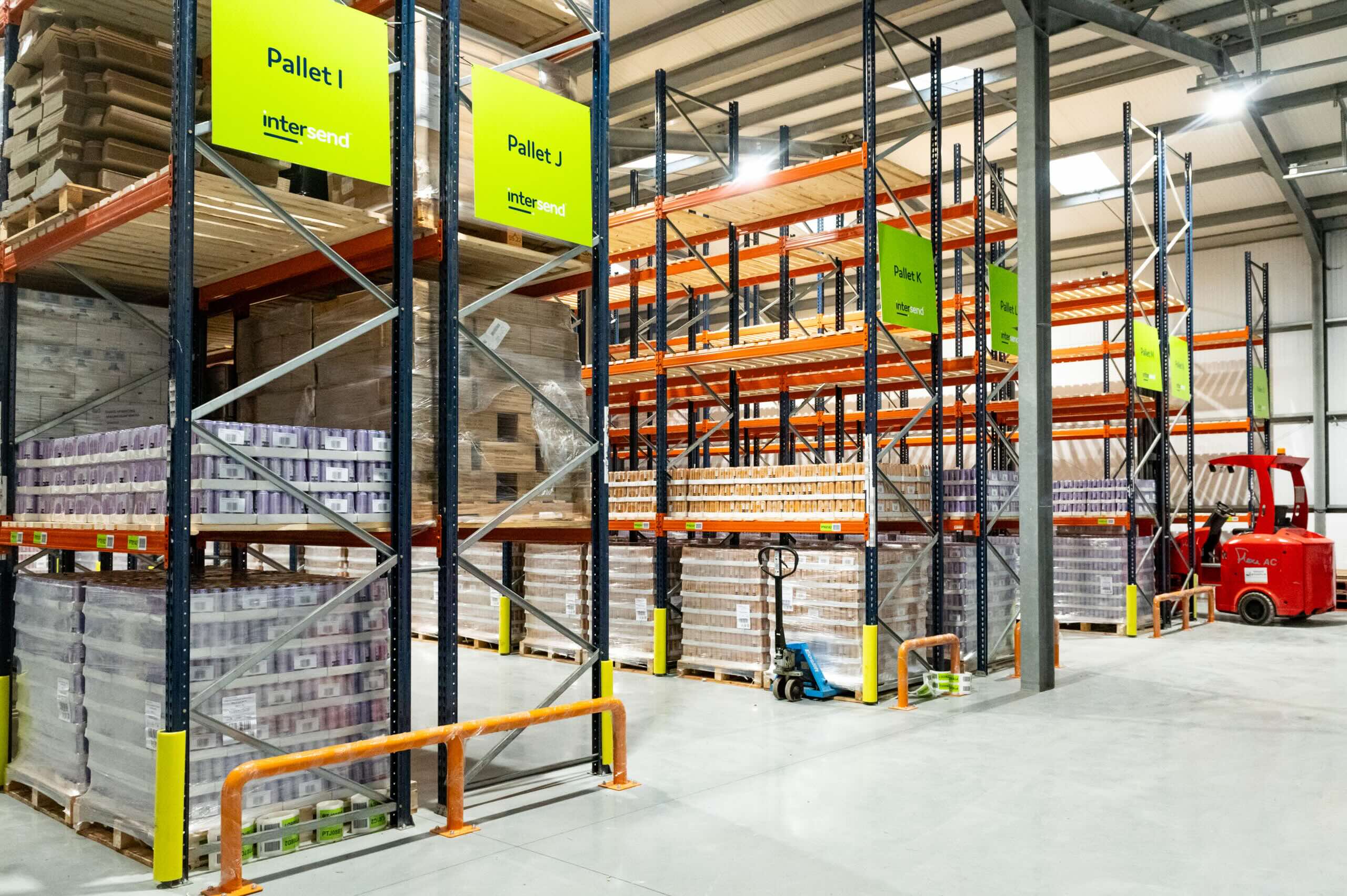
When stock arrives at a fulfilment centre, it’s checked in, logged into the warehouse management system (WMS) and stored in the right location. This part sounds simple, but it’s where efficiency starts. Smart storage, good space management and clear visibility of your inventory all matter more than you might think.
2. Picking
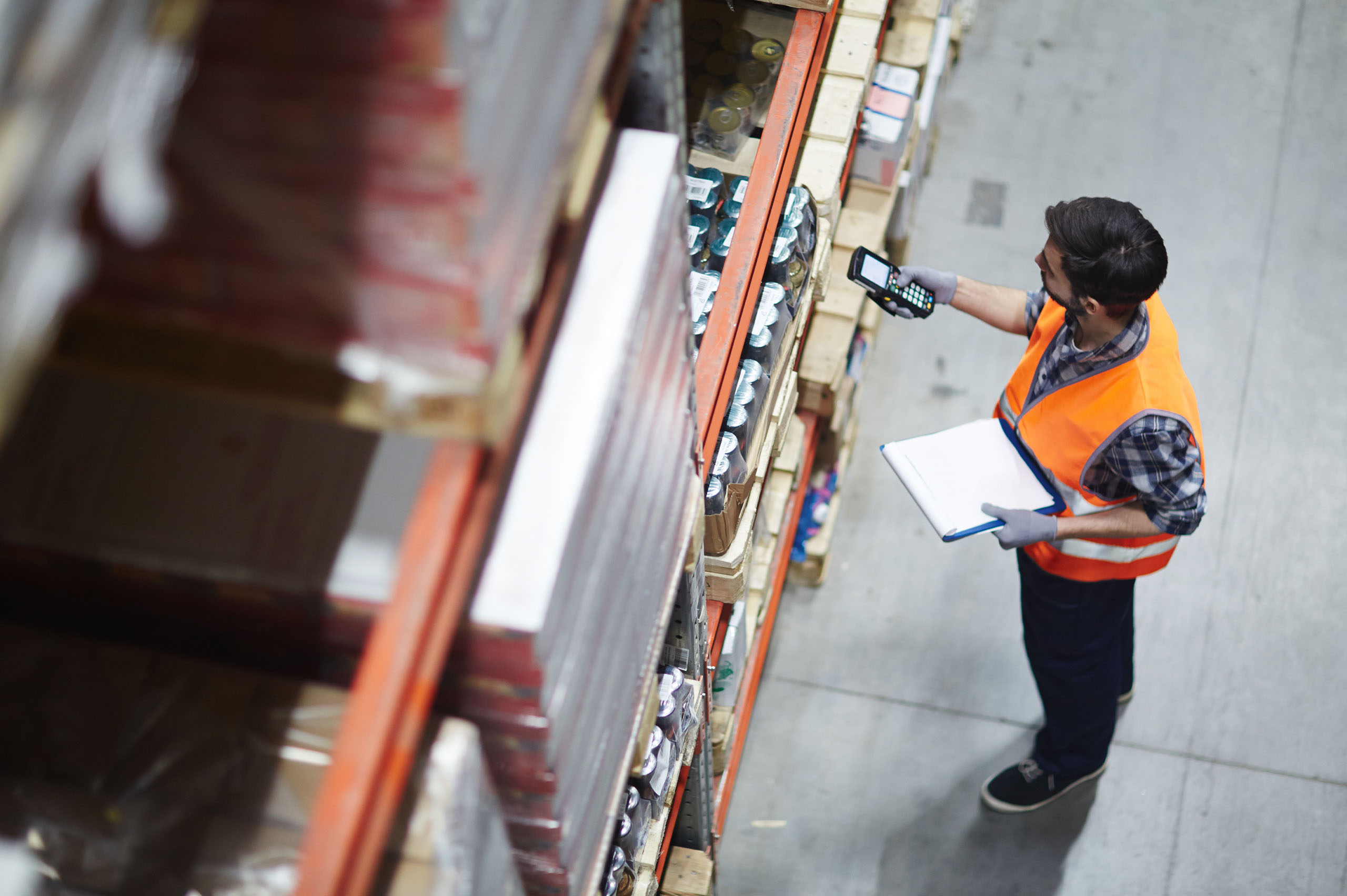
As soon as an order lands, the system tells warehouse staff where to find each item. This step often becomes a bottleneck for growing retailers. Slow or inaccurate picking means delays, higher costs and unhappy customers. At InterSend, we are proud of our 99%+ pick accuracy for our clients, ensuring their fulfilment remains as efficient as possible.
3. Packing
Packing isn’t just about putting something in a box. It’s about using the right materials, protecting products properly and making sure every parcel looks professional when it arrives. Strong packing reduces damage and returns while keeping courier costs down.
4. Shipping / dispatch
This is where parcels leave the building. The delivery stage is critical, and UK consumers are increasingly impatient. Around 70% of shoppers now expect same or next-day delivery, and 66% say fast shipping influences their buying decisions. Integration with couriers, live tracking and real-time updates are no longer nice-to-haves.
5. Returns & reverse logistics
Returns are part of eCommerce whether we like it or not. In fact, one in three online purchases are being returned, compared to 9% of in-store purchases. Handling returns quickly and fairly is what keeps customers coming back. Simple return labels, fast refunds and clear communication can save money and build trust.
6. Monitoring & optimisation
Fulfilment doesn’t stop once the parcel leaves the warehouse. The best fulfilment operations track metrics like picking accuracy, dispatch time and delivery success rate. By watching the data and making small improvements, fulfilment goes from being good enough, to the best-in-class customer experience.

eCommerce fulfilment vs order fulfilment: key differences
You’ll see both terms used: eCommerce fulfilment and order fulfilment. While they’re often used interchangeably, there are not exactly the same:
- Order fulfilment is a broad term: any process of fulfilling an order (including wholesale, B2B and offline retail).
- eCommerce fulfilment is specialised and deals with online sales, direct-to-consumer shipments, often smaller parcel sizes, managed inventory, higher delivery expectations and returns.
For UK online stores, that distinction matters. eCommerce fulfilment is built around platforms like Shopify or WooCommerce and customer expectations that keep rising year after year. Making sure your eCommerce fulfilment is fit to handle those expectations is vital.
Choosing an eCommerce fulfilment provider: factors to consider
Selecting the right fulfilment service is one of the most important decisions you will make as an eCommerce business, as it can make or break your customer experience. Here’s what to evaluate:
Why Should Businesses Outsource Fulfilment?
It’s a fair question – why should I outsource instead of handling all my fulfilment in house? Theres a reason that 60% of all eCommerce shipments are handled by Third Party Logistics. Businesses we work with have told us the advantages include:
- Your team can focus core business such as product, marketing and growth. You can leave the fulfilment logistics to the specialists.
- Outsourcing gives you access to ability to scale quickly, advanced software and staff that you may not have in house meaning overall cost savings.
- Specialist fulfilment providers are optimised for picking, packing and shipping, leading to faster deliveries, fewer errors and higher customer satisfaction. .
- Many providers offer ready-built technology integrations with eCommerce platforms, real-time tracking and dashboards.
- During peak seasons or rapid growth, an outsourced partner gives you the flexibility to scale up operations far quicker than you might on your own.
- For UK eCommerce, outsourcing means you’re tapping into the provider’s established courier relationships, UK-specific expertise and regulatory knowledge.
UK-specific fulfilment challenges and solutions
While the UK eCommerce market offers huge potential, there are specific challenges to address and opportunities to be gained by getting them right.
Brexit, customs and trade
The Challenge: Since the UK left the EU, logistics and fulfilment networks have had to adapt. UK exports to the EU fell by 23% from 2017 to 2024. Additional border checks, customs documentation and route changes have impacted fulfilment timelines and costs and made it more difficult for businesses.
The Solution: Choose a UK-based fulfilment providers that are familiar with UK/EU documentation.
Rising delivery expectations
The Challenge: Consumers in 2025 expect more, and their expectations are only set to rise. A Retail Economics report shows that 55% of consumers expect delivery within 48 hours.
The Solution: Choose a fulfilment partner with a UK network and fast dispatch capability
Labour shortage & cost pressures
The Challenge: In the UK logistics sector, 76% of supply chain/logistics leaders report workforce shortages.
Solution: Outsourcing reduces your in-house staffing burden, as well as providing technology advances that could make fulfilment more efficient.
Warehousing capacity & automation
The Challenge: Warehousing space is at a premium and automation is accelerating in the UK and investment in warehouse automation is rising.
Solution: Choose a provider with a modern warehouse infrastructure, automation and scalability built in to stay ahead.
Sustainability & regulatory pressure
The Challenge: Consumers and governments expect better environmental credentials for fulfilment and delivery – covering everything from packaging to emissions. 38% of consumers say that they regularly or always make purchase decisions based on the environmental impact of the product or company.
Solution: Choose a fulfilment partner that offers carbon-conscious shipping and sustainable packaging to stay compliant and keep customers happy. At InterSend, 99% of our packaging is biodegradable, compostable or recyclable so you can be assured that your orders are delivered responsibly without compromising your brand values.
The future of eCommerce fulfilment
The eCommerce sector is changing at a rapid pace, as customer expectations change and new technology innovations emerge in the market. So, what’s coming next in the world of eCommerce fulfilment and how can UK online stores prepare now?
AI & Automation
AI is not just a nice to have, it’s becoming the backbone of modern fulfilment, Over 85% of UK fulfilment warehouses will rely on automation or AI-assisted processes by 2030. This could be anything from robotics and automated conveyor systems to AI driven warehouse management systems.
Forward thinking fulfilment providers will be using AI for smart routing and enhanced forecasting to reduce time and improve seasonal planning.
Micro-Fulfilment & Regional Hubs
Many businesses are investing more in micro-fulfilment centres, which are small warehouses located closer to urban areas. These strategically placed hubs allow eCommerce businesses to meet rising expectations of same day and next day delivery, particularly in heavily populated UK cities. Whilst a lot of large retailers are easily able to adopt this approach, UK SME’s can also benefit by choosing fulfilment providers that operate multiple regional hubs instead of one central warehouse.
Sustainable Fulfilment Practices Become a Buyer Expectation
Sustainability is not optional in 2026 and beyond, it is becoming a competitive advantage. UK customers increasingly make purchasing decisions based on environmental performance. Fulfilment providers who invest in eco-conscious operations will be best positioned to serve modern eCommerce brands.
Omnichannel & Hybrid Fulfilment Models
As customers shop more and more across different channels, in 2026 will fully expect fulfilment to match that flexibility. Omnichannel fulfilment will become more and more important including more uptake in ship-from-store, click-and-collect, buy online return in store, inventory pooling and consistent tracking across all channels.
For UK brands operating both eCommerce and bricks-and-mortar, hybrid fulfilment models will increasingly become the norm, with fulfilment providers providing real-time integration across multiple platforms.
Advanced Software & Visibility: Real-Time Insights and Predictive Intelligence
In modern eCommerce fulfilment, data is king. It is essential for efficient operations that businesses are utilising advanced software, especially as UK retailers juggle multi-channel, post-Brexit logistics and growing complexity in customer expectations.
Key software advancements:
- Real-time inventory visibility across multiple warehouses and channels.
- Predictive analytics to forecast demand and reduce excess stock.
- Dynamic courier routing that automatically selects the fastest or cheapest shipping option.
- Smart returns handling using AI to decide whether items should be restocked, refurbished or recycled.
- Customer-facing tracking portals with live updates, improving post-purchase experience.
In the next five years, eCommerce brands that aren’t using advanced visibility tools may struggle to compete with those who automate fulfilment decision-making.
Choosing your next steps
If you’re ready to optimise your fulfilment operations, here’s a quick action plan:
- Audit your current fulfilment process
- Benchmark your KPIs. Decide what’s your ideal dispatch time, pick error rate, delivery success and cost per order.
- Research fulfilment providers with UK-specific strengths (location, courier network, software).
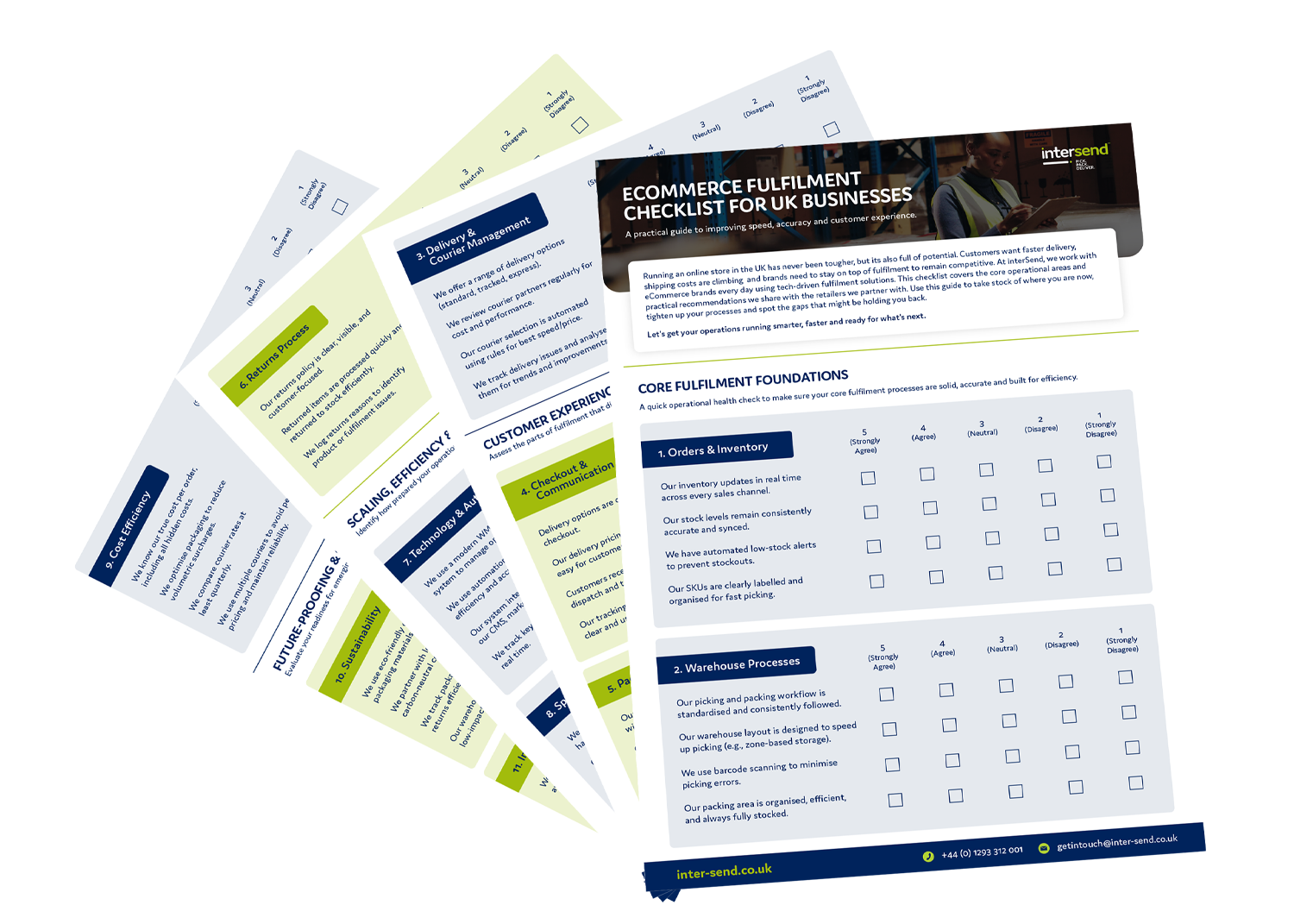
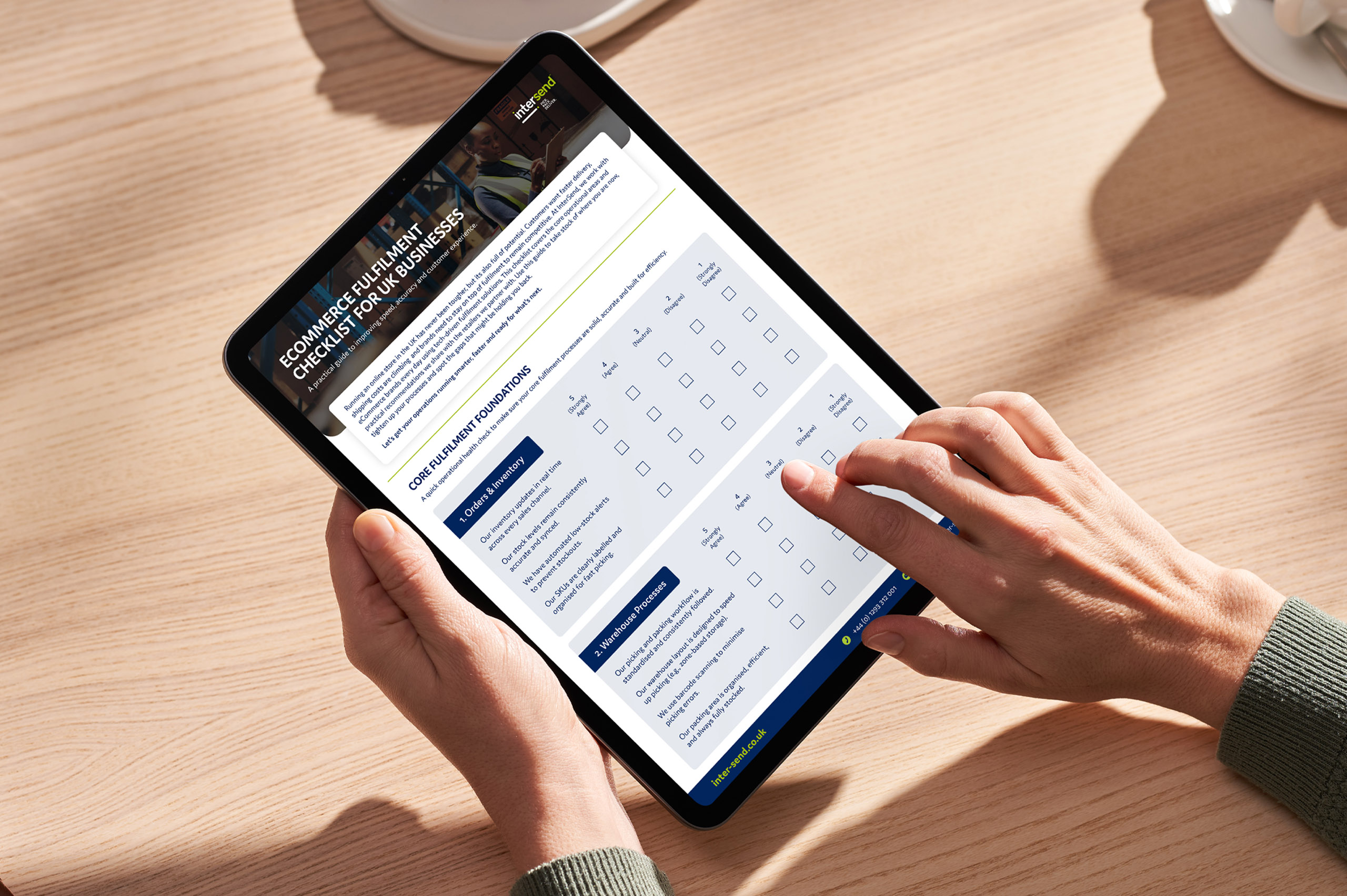
- Download our checklist for UK eCommerce fulfilment to ensure you have covered everything.
Ready to take your fulfilment to the next level? Download our free eCommerce Fulfilment Checklist for UK Businesses now and make sure you choose the right partner, optimise your process and deliver excellence in every order.
In 2025, InterSend shipped to 83 different countries, fulfilling 129k orders and over a million items.
If you’re ready to scale with a fulfilment partner trusted by fast-growing UK brands, let’s talk.
Read more:

CATEGORIES
RELATED POSTS



POPULAR TAGS
KEEP IN TOUCH
GET OUR FREE WEEKLY RETAIL NEWSSTAND REPORT
Enter your email below for our free weekly retail newsstand report, InterMedia updates and relevant industry news. You can easily unsubscribe at any time. Click here for our privacy policy.